
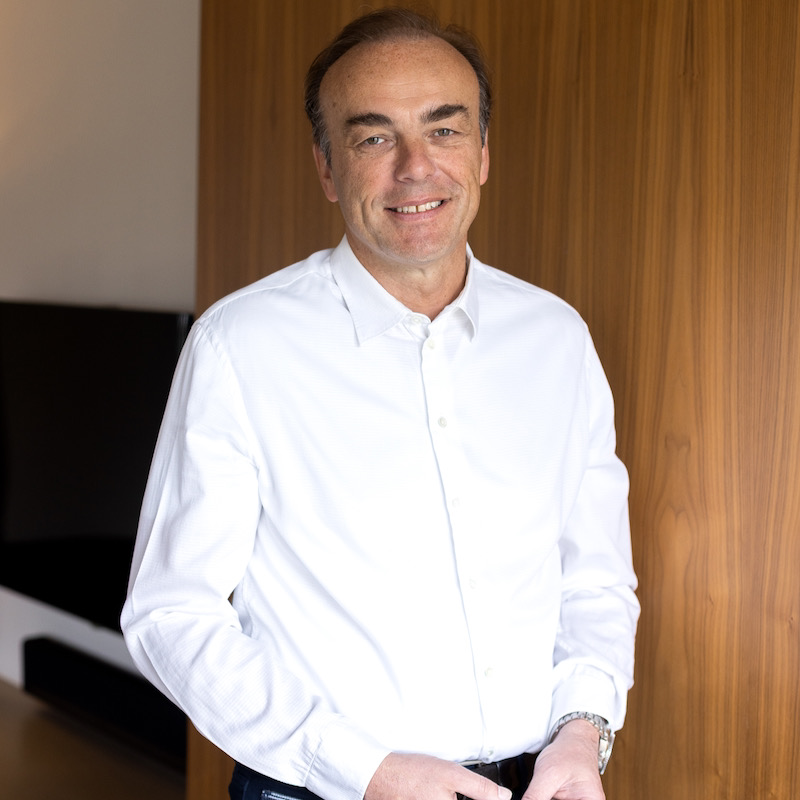
Karl Van Hoey
Ever since my student days, I’ve been passionate about philosophy… The great philosophers of Classical Antiquity, of the Enlightenment, and of Existentialism. I woke up with them and went to sleep with them.
Despite that interest, I never graduated as a philosopher, but as a lawyer instead. After that, I went on to specialize in human resources, and finally in coaching.
But in the meantime, I’ve come to realize that you don’t have to be an academic philosopher to be able to philosophize. And also to be able to connect philosophy with my other great passion: coaching. Just as they did in Antiquity: Socrates — in my view more a coach than a philosopher — is invariably counted among the philosophers of Antiquity.
A little less long ago than Antiquity, namely about 15 years ago, I met Leda. She shares exactly the same passions: coaching and philosophy. Over the years, and after countless conversations, it became clear to us that “someday” we would do something with our shared passions.
This place is a first manifestation of that!

Leda Turai
My relationship with philosophy is practical, personal, and developmental. I do not approach philosophy as an abstract intellectual exercise, but as a disciplined way of examining how we live, lead, relate, decide, and become.
Philosophy has always helped me ask better questions: What do we take to be true? What kind of person are we becoming through our choices? How do language, culture, power, identity, and responsibility shape the way we see the world? What remains unseen in the assumptions that guide our action?
In my work with leaders and teams, philosophy becomes a way of slowing down thought without losing contact with reality. It helps create the conditions for deeper reflection, more honest dialogue, and more responsible action. This is especially important for senior leaders, who often live inside complexity, pressure, visibility, and consequence. At that level, transformation is rarely only about new skills. It often requires a shift in perception, identity, ethics, and relationship to the wider system.
My philosophical interests are closely connected to my work in coaching, leadership development, adult development, and consciousness research. I am particularly drawn to questions of meaning, identity, wisdom, the nature of experience, and the relationship between inner life and outer action. My current PhD research explores identity, consciousness, dreams, archetypal experience, and transformation, continuing a long-standing inquiry into how deep change becomes possible.
For me, philosophy is not separate from transformation. It is one of its roots. It invites us to question what is automatic, to make the implicit visible, to hold uncertainty with more maturity, and to recover a more conscious relationship with ourselves, others, and the world we help shape.